
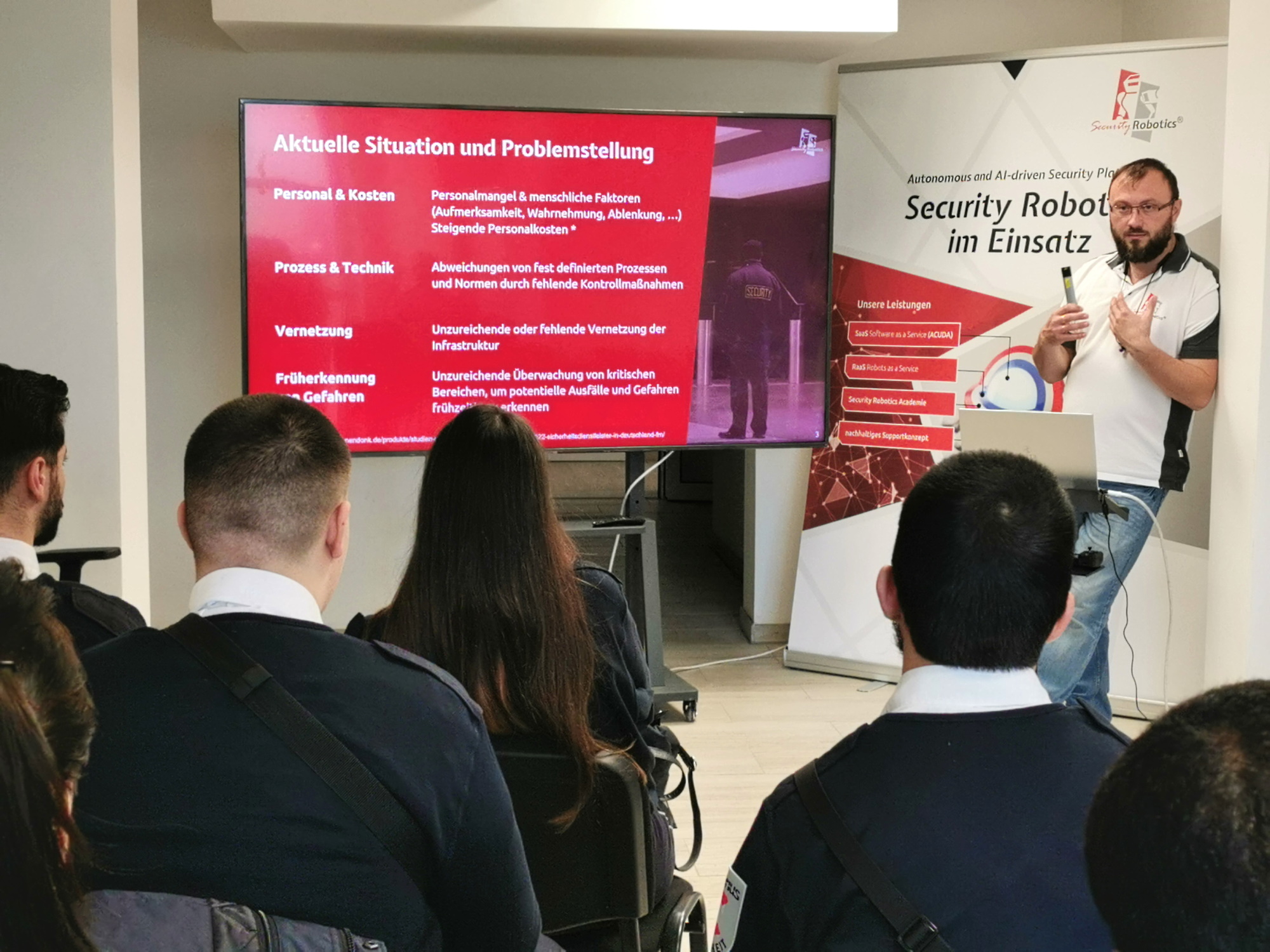
Our world is changing. And this doesn’t just apply to social, political, and climatic conditions—no, technologically as well, everything seems to be evolving faster and faster. Ideas once dismissed as science fiction have long since become reality, and in the field of robotics, too, change is advancing inexorably. Robotic systems have found their way into many areas of life, where digitization and automation are making everyday life easier. The manufacturing industry is one of the driving forces behind this change and is operating an increasing number of networked facilities worldwide—from efficient robotic systems to entire production lines where no human hands are involved at all.
However, in other industries, people seem to be aware of today’s challenges, but not of any meaningful solutions.
Lack of knowledge or lack of will?
As examples, we’d like to highlight three of these areas today: security, facility management, and maintenance. In all three of these very different areas, the fundamental goal is to ensure smooth operations and, ideally, to proactively prevent both internal obstacles (staff availability, technical malfunctions) and external factors (delays, sabotage). Whether it involves “typical” security guards, cleaning staff, receptionists, service personnel, or maintenance technicians, it is always people who perform these tasks. Robots remain the exception…for now. Why is that?
Although AI has long been accepted in many sectors—such as the manufacturing industry mentioned at the beginning—AI colleagues still face a lack of understanding in other industries. People no longer feel secure in their jobs; they fear being replaced or feeling useless. Cost considerations and the perceived time commitment also consistently play a role. Ultimately, many people shy away from change and cling to the status quo simply out of ignorance. Managers can best address these concerns by educating themselves about the possibilities of robotics and connected AI, thereby recognizing the potential these technologies hold for their workforce.
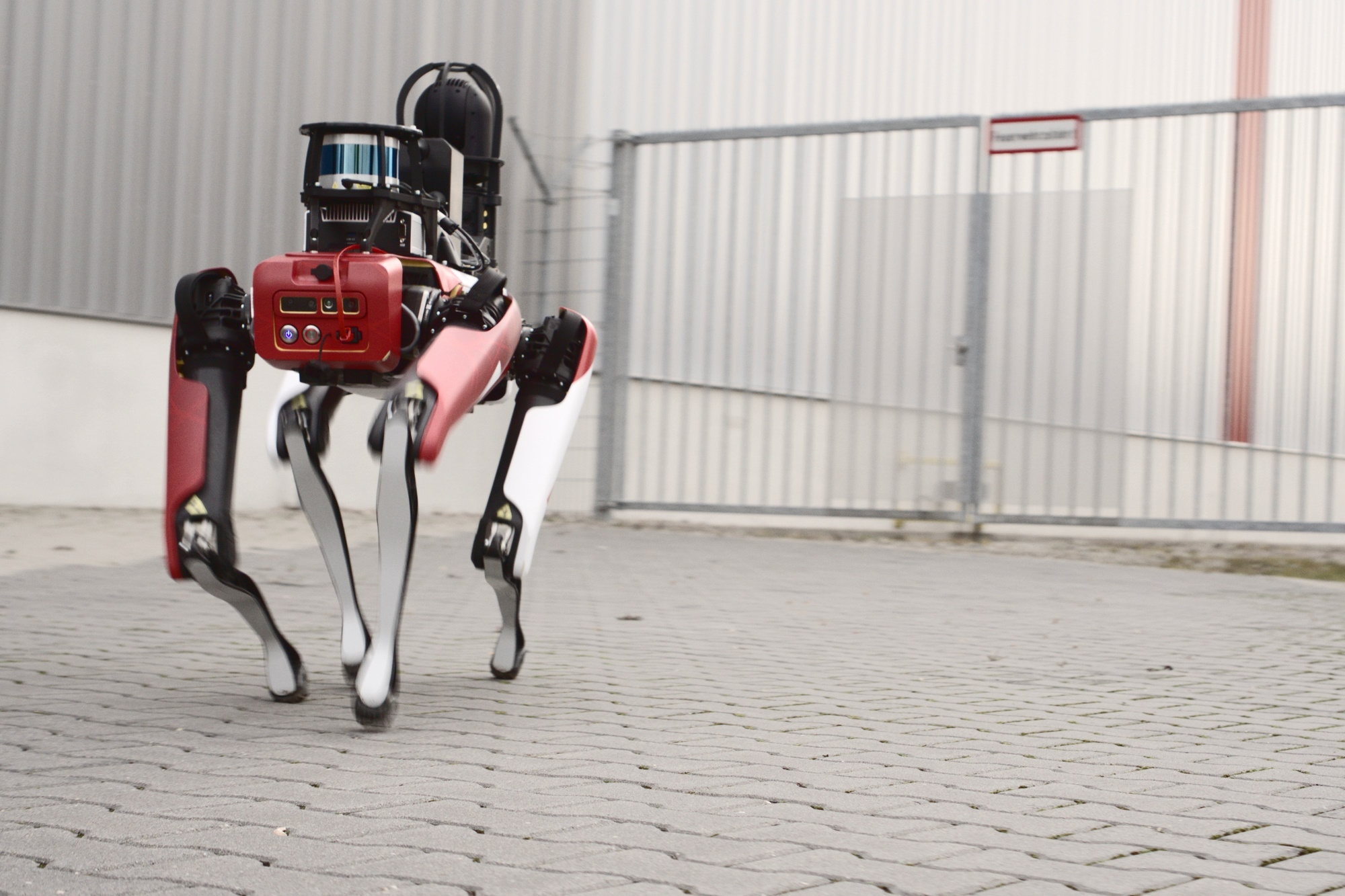
Why We Need to Use AI Robotics—In a Nutshell!
Simply put, robotic systems can accomplish more than a human can in the same amount of time. Efficient, error-free, tireless, fully networked, and equipped with more and more powerful senses, a robot can perform multiple tasks simultaneously within its area of expertise, react autonomously, and—this is the key point—relieve humans of repetitive, physically demanding, and hazardous tasks. Robots, therefore, do not replace humans, but rather give them the space to apply their unique strengths—such as empathy, experience, and decision-making ability—in a decisive manner in other important roles.
When one considers that the number of people in the workforce is expected to continue declining in the coming years—and that this will lead to a growing shortage of workers, even unskilled ones—it becomes clear that only service providers who are willing to robotic systems to its portfolio to integrate, for example, for security patrols, maintenance rounds, or automated cleaning.
What does all this have to do with education?
Time and again, we see how, as soon as understanding deepens, a wide variety of use cases suddenly emerge, our conversation partners come up with ideas, bring ever-new application scenarios into the discussion, and there’s a real “aha” moment. Our goal is to convey this kind of understanding.
And because learning is a lifelong process, and AI and robotics will play a role at every stage of life and in every professional role, we focus not only on decision-makers, experienced professionals, and experts, but also reach out to younger people at the same time.
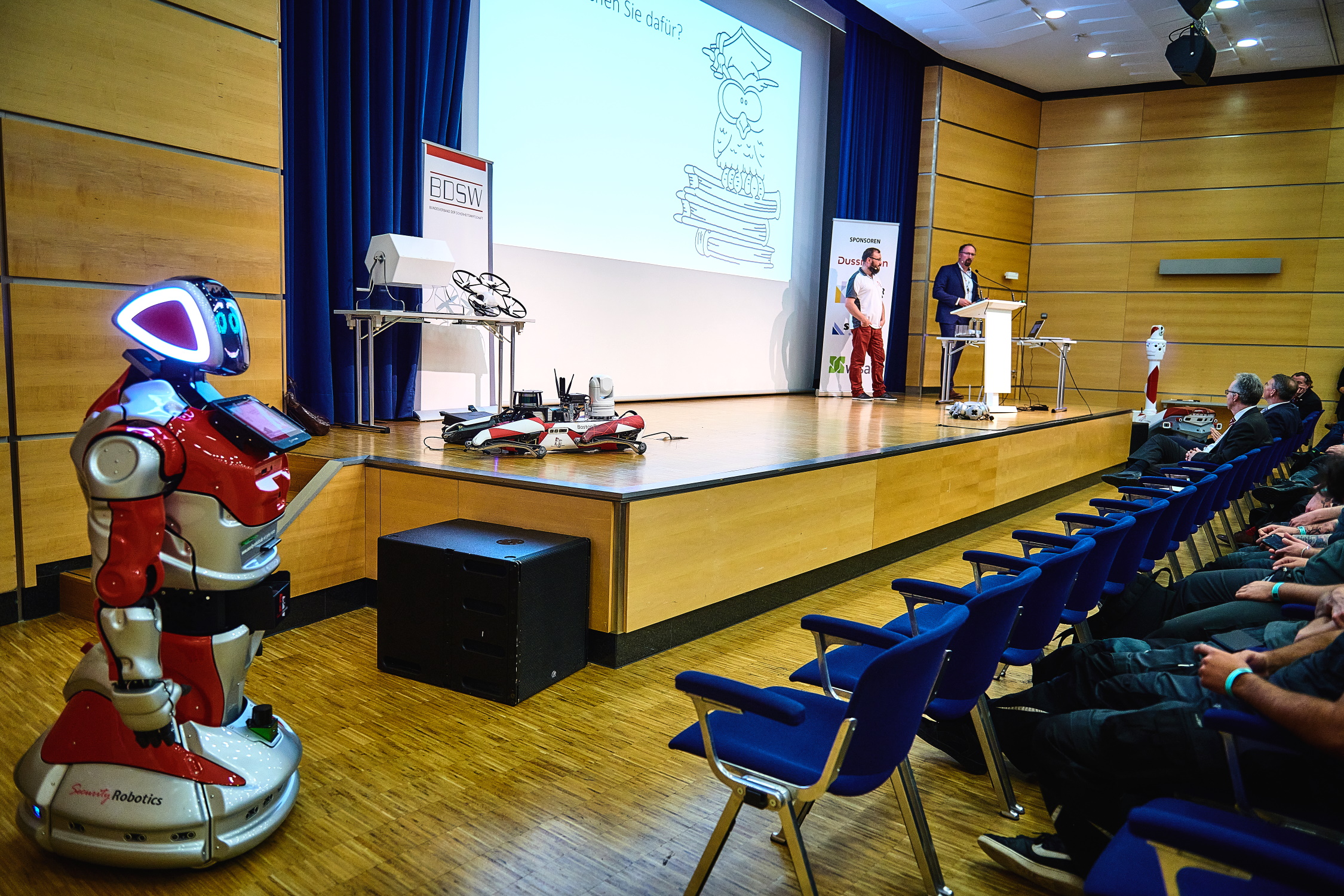
Over the next few decades, high school students, apprentices, and college students will take the “new” technology for granted and, with proper training, will make an enormous contribution to its further development. It therefore stands to reason that we should prepare this very generation for the challenges of the future. As knowledge leaders, we are guided by our own slogan, “We lead the way,” and, together with our partner, the the renowned NBS at the 5th Training and Continuing Education Day, organized by the BDSW as part of the Security Trade Show in Essen Hundreds of trainees from all relevant security service providers listened intently to the presentations and engaged with the topic by asking many curious questions. Well-established, broad-based associations such as the BDSW offer their members the opportunity to receive practical and straightforward support—for example, through workshops or informational roadshows—as a central source of knowledge.
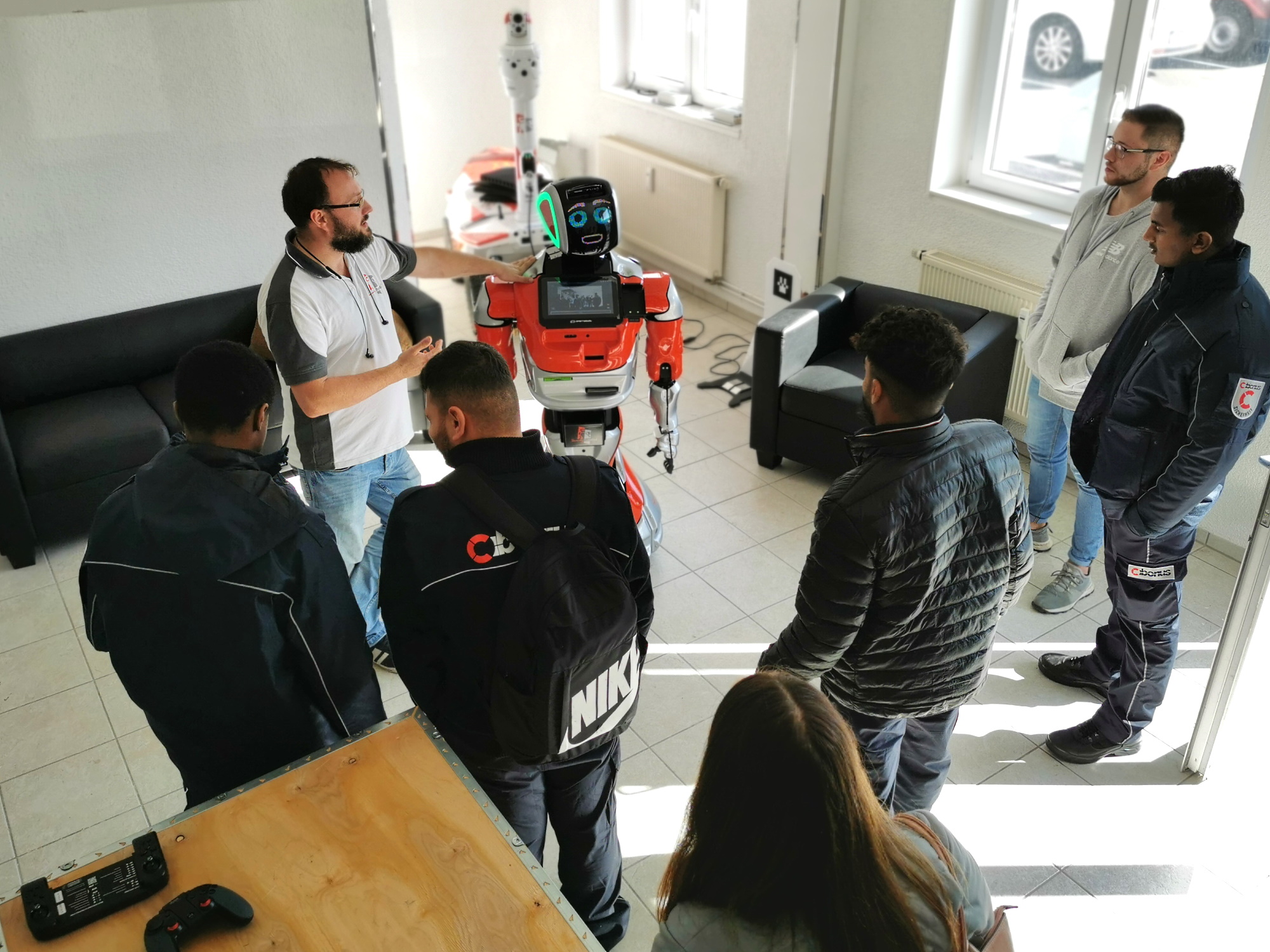
Getting Up Close and Personal with Technology – Robotics Up Close
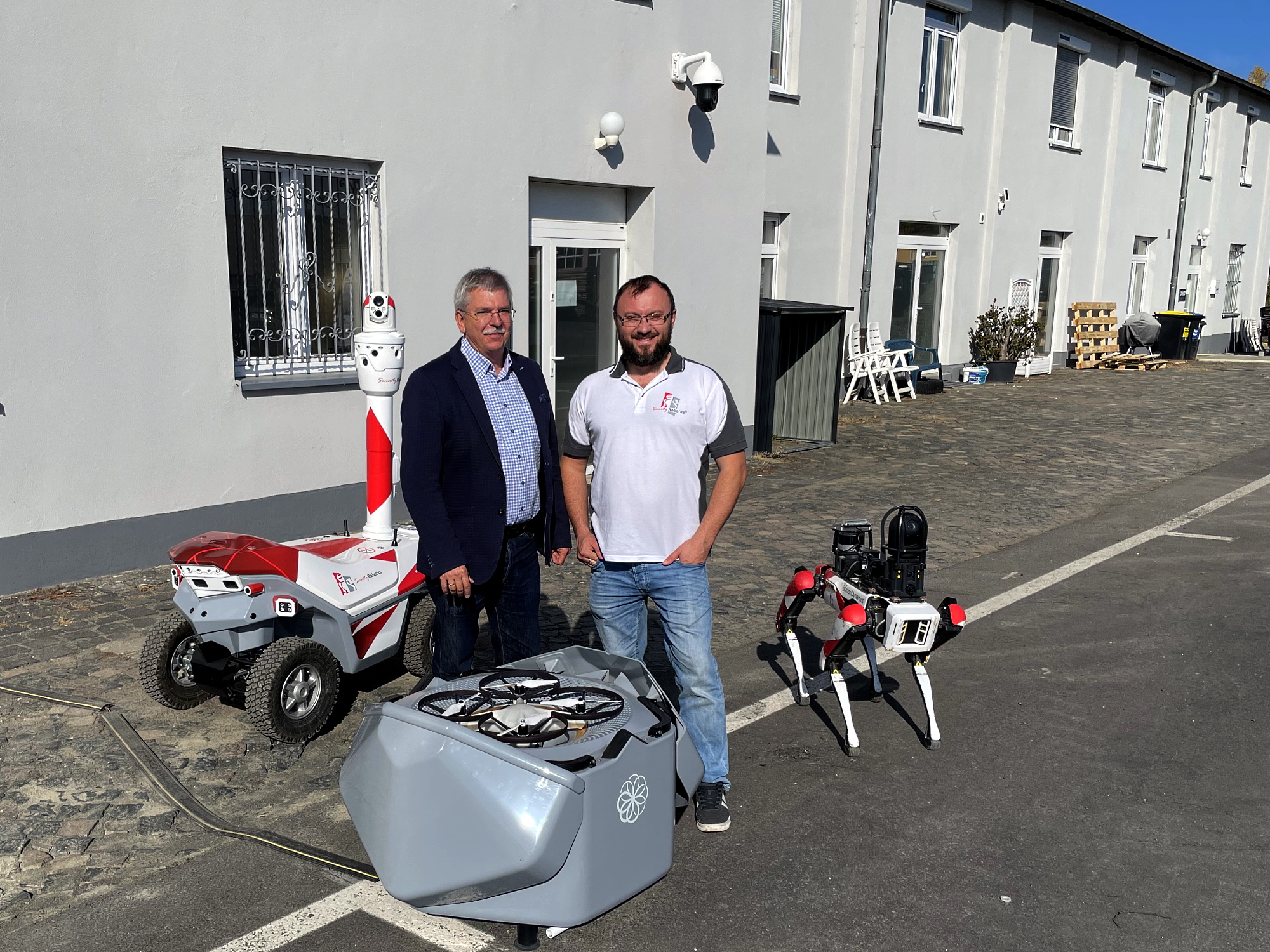
But theoretical lectures alone are by no means enough; it’s important to stimulate the mind and encourage people to think for themselves and try things out. Young people have very few reservations about this—a fact that became clear at Youth Day, an event for apprentices that we held at our Leipzig test site, where we demonstrated our autonomous systems live. Anyone who wanted to was allowed to touch—and even control—the running, driving, and flying robots to get a feel for their potential AI colleagues.

The field of robotics is multifaceted, growing exponentially, and subject to constant change. Technological evolution and revolution alternate, and there are many different perspectives from which to approach the subject. That is why we are delighted to engage with experts who bring nuanced viewpoints, diverse experiences, and fresh ideas to the field of robotics. Dr. Andreas Karguth, who has been active in the industry for more than 30 years—developing, researching, consulting, and publishing—is a discussion partner whom we hold in high regard. Together, we will focus in the future on exploring potential new fields of application and deepening the visual and haptic experience of robots.
We maintain close, constructive partnerships with the Northern Business School from Hamburg, on Saxony’s Vocational Academies, universities in the region, and continuing education centers of the Adult education . Whether lectures on the topic “How robots will effectively support industry and the service sector in the future.” Through joint training and study projects or coordinated course content, we continually contribute our expertise and aim to empower people of all ages and employees of all industries to understand and positively engage with robotics.
Lots of questions? All the answers >> Security Robotics Academy
And finally, our goal with the project currently under development is to Security Robotics Academy We use a level-based approach to train different target user groups of robotic systems—from beginners to experts—in their understanding and day-to-day handling of these systems. This enables planners to factor in the pros and cons of networked robotics into their considerations and integrate them effectively into client projects. We teach users how to work smartly with their new colleagues for mutual benefit. Integrators gain the knowledge to customize, integrate, and network new systems, as well as define their tasks.
Be an active part of your robotic future
Now it’s up to you, the reader of this article, to draw your own conclusions and assess just how well-informed you really are about the opportunities and possibilities that AI and robotics offer your business. Educate yourself, expand your knowledge, and take an active role in shaping your future—“aha” moments guaranteed.